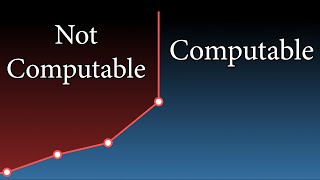
Quick Context: The video will cover the Halting Problem, the step-by-step proof by contradiction using diagonalization (the adversarial machine ... A team of strangers recently came together in an online collaboration called the Busy Beaver Challenge to pin down the value of ...
The Boundary Of Computation - Reference Overview
Topic Summary
The video will cover the Halting Problem, the step-by-step proof by contradiction using diagonalization (the adversarial machine ... A team of strangers recently came together in an online collaboration called the Busy Beaver Challenge to pin down the value of ... The machine learning consultancy: Join my email list to get educational and useful articles (and nothing else!)
Related Context
In 1936, before the first physical computer was even built, Alan Turing ... "Ever wondered what happens when simple rules meet infinite complexity? Sorry for the stuttering, hopefully it will be gone in future videos :)
Main Points
Details about The Boundary Of Computation.
Useful Tips
Reader notes for this topic.
Important details found
- The video will cover the Halting Problem, the step-by-step proof by contradiction using diagonalization (the adversarial machine ...
- A team of strangers recently came together in an online collaboration called the Busy Beaver Challenge to pin down the value of ...
- The machine learning consultancy: Join my email list to get educational and useful articles (and nothing else!)
- In 1936, before the first physical computer was even built, Alan Turing ...
- "Ever wondered what happens when simple rules meet infinite complexity?
Why this topic is useful
This topic is useful when readers need a quick overview first, then want to move into supporting details and related references.
Useful Tips
Why are related topics included?
Related topics help readers compare nearby references and understand the broader subject.
What is this page about?
This page summarizes The Boundary Of Computation and connects it with related entries, references, and supporting context.
Is the information always complete?
Not always. Some topics may need verification from official or primary sources.