Topic Brief: Julia is a dynamic general purpose programming language popular for scientific computing and big data analytics. Ruby is a dynamic programming language most well-know for powering the Ruby on Rails fullstack web framework.
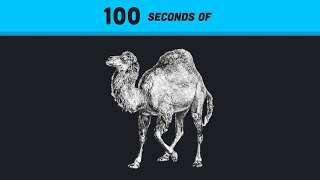
Perl In 100 Seconds - Quick Context
Overview
Julia is a dynamic general purpose programming language popular for scientific computing and big data analytics. Ruby is a dynamic programming language most well-know for powering the Ruby on Rails fullstack web framework. Fortran is the world's first high-level procedural programming language developed at IBM in the 1950's.
Background Notes
Elixir is a dynamic functional programming language built on top of the Erlang BEAM virtual machine. Lisp is world's second high-level programming language and is still used to build software today. Rust is a memory-safe compiled programming language for building high-performance systems.
Important Notes
Find out why Turbo Pascal was one of the world's most popular programming ... Haskell is a purely functional programming language based on lambda calculus.
Helpful Reminders
Reader notes for this topic.
Important details found
- Julia is a dynamic general purpose programming language popular for scientific computing and big data analytics.
- Ruby is a dynamic programming language most well-know for powering the Ruby on Rails fullstack web framework.
- Fortran is the world's first high-level procedural programming language developed at IBM in the 1950's.
- Elixir is a dynamic functional programming language built on top of the Erlang BEAM virtual machine.
- Lisp is world's second high-level programming language and is still used to build software today.
Why this topic is useful
This format is designed to help readers move from a broad question into more specific pages without losing context.
Helpful Reminders
What is this page about?
This page summarizes Perl In 100 Seconds and connects it with related entries, references, and supporting context.
Is the information always complete?
Not always. Some topics may need verification from official or primary sources.
How should readers use this information?
Use it as a starting point, then open related pages for more specific details.